


Santa and the Three Wise Men
- Dec 10, 2025
- 11 min read
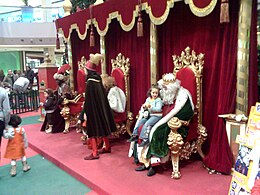
We have traced the gift giving of Christmas to the gifts of the wise men, traditionally imagined as three kings from the East. The gifts are gold, frankincense and myrrh, for King, priest and prophet. A part of the Wikipedia article for the Biblical Magi is appended below.
It is amazing that the Astrologers of Babylon* could figure the birth of the Messiah in place and time. Both Jews and Christians reject astrology, though there is that one line in Maimonides’ Letter on Astrology, near the end, where he speaks of what occurs as coming “through” the stars, and makes us wonder… Maimonides and others reject Jesus as the Messiah or the Christ because he was killed, while prophecy says that the messiah will reign, and reign “forever,” as Lincoln tries to say of our government of by and for the people, that it shall “not perish from this earth.” Some think his star was a conjunction of Venus or Saturn and Jupiter about 4-7 B. C., but the star seen by the shepherds hovers, and brings them without astrology right to the very manger-cave in Bethlehem, which is why we have shepherds wandering around in our manger scenes. Herod dies about 4 B.C., but is alive at the slaughter of the innocents. When the three wise men find him (After accidentally going to the address of Monty Python’s Brian- who keeps getting mistaken for the Messiah), they give him gifts of gold, frankincense and myrrh, said to indicate that the one born is a king, a priest and a prophet, myrrh being an herb of sorrow.
The prophecies of the Messiah are obvious to the Jews who are questioned by Herod and know from scripture, somehow, that the messiah will be born in Bethlehem (Micah 5:2). Like the line of Isaiah (7:14), “a “virgin will conceive,” it is not clear how they know that this is a prophecy of the messiah. But Isaiah prophesies Galilee, and also the things he will be called, which include “Mighty God (Oxford, or “lord”) and “Everlasting Father.” (This is also where Cheech and Chong’s sources got “Prince of Peace,” when Jesus is stopped at the southern border!) But it is also prophesied that he will be “called a Nazarene.” and called “out of Egypt.” There are relatives of the Jews in Ethiopia, from the marriage of Solomon to the Queen of Sheba, as there may have been in Egypt, and we suspect the Christ was hidden among Ethiopian Jews. These claim that the ark is there, while 2 Maccabees 2:4-8 says it is within eyesight of the tomb of Moses, hidden by Jeremiah in the Mountains of Jordan at the edge of the Holy Land. The ground movements around Galilee and Nazareth can also be deciphered, as Elizabeth is an aunt of Mary, perhaps a sister of St. Ann the mother of Mary, who was married to Joachim. Though they did not travel much, Jesus knew John the Baptist as a grand-cousin, the son of the Aunt of his mother. If the mother of John the Apostle, Salome, was a sister of Mary, John the Apostle may have been a cousin of Jesus, perhaps fishing near Peter on the sea of Galilee there to the east. And were these, Elizabeth, Mary, Zecharia and Joachim, also of the lineage of David? Otherwise, the way we understand the annunciation and the immaculate conception, Jesus would be the descendant of David by law but not by nature. Most in that region are from other of the twelve tribes. But Elizabeth and Joachim lived just South of Nazareth but in a different province (Samaria). It is not unusual, and would not be especially mentioned, that a “young woman” conceive, though this is how the line might read, and how it is read following Maimonides.
It is under Augustus that Herod commits the slaughter of the innocents, Rachel weeping for the children of Ramah. The interaction between human choice and divine Providence is most amusing here, as Herod is able to make the birth of the messiah the cause of the slaughter, yet the angel is able to prevent the infant Jesus from being caught up in this. If anyone wondered whether the character of Augustus is honestly portrayed in the Rex Augusti, the autobiography, well there it is. And how did a fellow like Herod come to be called King of the Jews? Josephus lets it slip that Herod paid off Caesar and Antony, and also that Cleopatra added Herod to her trophy case. Despite writing under Roman emperors, Josephus, like Tacitus, gives the historian a second line, so that the Roman history can be seen by triangulation.
In the end, the three wise guys were not very wise to report the birth of the messiah to Herod king of the Jews. Providence can apparently protect the infant Jesus, but not the children of Bethlehem, and that this should result from the gifts and adoration of the three wise men shows how paradoxical the question of providence is in the scriptures- for as we imagine, the birth of the Messiah would not result in such a counter-stroke.
Gift-giving is a sharing in the divine fullness and overflow that increases our joy. We think it sad that the Witnesses, trying to purify our sects from idolatry, have rejected Santa and Christmas as though it were a Pagan Holiday. When Paulo chides the Roman Christians for observing “days and months and years,” we think it also an idolatry to make so much of such a thing. We do not adore Santa Claus, and the adoration of the Magi is fitting for the Messiah, but no mere man. Hence, the Christ is worshiped in the scriptures on various significant occasions.
The Who – [Christmas https://youtu.be/7BWiYJ3yykw via @YouTube]:
Did you ever see the faces of the children,
they get so excited
Waking up on Christmas morning
Hours before the winter sun’s ignited
They believe in dreams and all they mean Including heaven’s generosity
Peeping round the doorTo see what parcels are for free
In curiosity...
*Chuck Missler discerns that the 3 wise men knew about the Messiah from a prophecy when Daniel was in Babylon. This solves the problem that these seem to have found the Messiah by means of astrology.Missler reasons that Daniel was once head of the Magi, and must have left instructions as to what they should do when they saw the star of Bethlehem- how else would they know? This may be less surprising if we believe the double verdical dream that allowed Israel to avoid pointless slaughter as Alexander passed by and the High Priest refused to violate his prior oath to Darius.
Appendix: Wikipedia: The Biblical Magi:
The biblical Magi[a] (/ˈmeɪdʒaɪ/ or /ˈmædʒaɪ/;[1] singular: magus), also referred to as the (Three) Wise Men or (Three) Kings, were – in the Gospel of Matthew and Christian tradition – distinguished foreigners who visited Jesus after his birth, bearing gifts of gold, frankincense and myrrh. They are regular figures in traditional accounts of the nativity celebrations of Christmas and are an important part of Christian tradition.
Matthew is the only one of the four canonical gospels to mention the Magi. Matthew reports that they came “from the east” to worship the “king of the Jews”.[2] The gospel never mentions the number of Magi, but most western Christian denominations have traditionally assumed them to have been three in number, based on the statement that they brought three gifts.[3] In Eastern Christianity, especially the Syriac churches, the Magi often number twelve.[4] Their identification as kings in later Christian writings is probably linked to Psalm 72:11, “May all kings fall down before him”.[5][6]
Biblical account
Traditional nativity scenes depict three “Wise Men” visiting the infant Jesus on the night of his birth, in a manger accompanied by the shepherds and angels, but this should be understood as an artistic convention allowing the two separate scenes of the Adoration of the Shepherds on the birth night and the later Adoration of the Magi to be combined for convenience.[7] The single biblical account in Matthew simply presents an event at an unspecified point after Christ’s birth in which an unnumbered party of unnamed “wise men” (μάγοι, mágoi) visits him in a house (οἰκίαν, oikian),[8] not a stable, with only “his mother” mentioned as present. The New Revised Standard Version of Matthew 2:1–12 describes the visit of the Magi in this manner:
In the time of King Herod, after Jesus was born in Bethlehem of Judea, wise men from the East came to Jerusalem, asking, “Where is the child who has been born king of the Jews? For we observed his star at its rising, and have come to pay him homage.” When King Herod heard this, he was frightened and all Jerusalem with him; and calling together all the chief priests and scribes of the people, he inquired of them where the Messiah was to be born. They told him, “In Bethlehem of Judea; for so it has been written by the prophet: ‘And you, Bethlehem, in the land of Judah, are by no means least among the rulers of Judah; for from you shall come a ruler who is to shepherd my people Israel.'” Then Herod secretly called for the wise men and learned from them the exact time when the star had appeared. Then he sent them to Bethlehem, saying, “Go and search diligently for the child; and when you have found him, bring me word so that I may also go and pay him homage.” When they had heard the king, they set out; and there, ahead of them, went the star that they had seen at its rising, until it stopped over the place where the child was. When they saw that the star had stopped, they were overwhelmed with joy. On entering the house, they saw the child with Mary his mother; and they knelt down and paid him homage. Then, opening their treasure chests, they offered him gifts of gold, frankincense, and myrrh. And having been warned in a dream not to return to Herod, they left for their own country by another path.
Biblical Magi stained glass window, ca. 1896, at Church of the Good Shepherd (Rosemont, Pennsylvania), showing the three magi with Joseph, Mary, and Jesus
The text specifies no interval between the birth and the visit, and artistic depictions and the closeness of the traditional dates of December 25 and January 6 encourage the popular assumption that the visit took place the same winter as the birth, but later traditions varied, with the visit taken as occurring up to two winters later. This maximum interval explained Herod’s command at Matthew 2:16–18 that the Massacre of the Innocents included boys up to two years old. More recent commentators, not tied to the traditional feast days, may suggest a variety of intervals.[9]
The wise men are mentioned twice shortly thereafter in verse 16, in reference to their avoidance of Herod after seeing Jesus, and what Herod had learned from their earlier meeting. The star which they followed has traditionally become known as the Star of Bethlehem.
Description
The Magi are popularly referred to as wise men and kings. The word magi is the plural of Latin magus, borrowed from Greek μάγος (magos),[10] as used in the original Greek text of the Gospel of Matthew (in the plural: μάγοι, magoi). Greek magos itself is derived from Old Persian maguŝ from the Avestan magâunô, i.e., the religious caste into which Zoroaster was born (see Yasna 33.7: “ýâ sruyê parê magâunô” = “so I can be heard beyond Magi”). The term refers to the Persian priestly caste of Zoroastrianism.[11] As part of their religion, these priests paid particular attention to the stars and gained an international reputation for astrology, which was at that time highly regarded as a science. Their religious practices and use of astrology caused derivatives of the term Magi to be applied to the occult in general and led to the English term magic, although Zoroastrianism was in fact strongly opposed to sorcery. The King James Version translates the term as wise men; the same translation is applied to the wise men led by Daniel of earlier Hebrew Scriptures (Daniel 2:48). The same word is given as sorcerer and sorcery when describing “Elymas the sorcerer” in Acts 13:6–11, and Simon Magus, considered a heretic by the early Church, in Acts 8:9–13. Several translations refer to the men outright as astrologers at Matthew Chapter 2, including New English Bible (1961); Phillips New Testament in Modern English (J.B.Phillips, 1972); Twentieth Century New Testament (1904 revised edition); Amplified Bible (1958-New Testament); An American Translation (1935, Goodspeed); and The Living Bible (K. Taylor, 1962-New Testament).
Although the Magi are commonly referred to as “kings,” there is nothing in the account from the Gospel of Matthew that implies that they were rulers of any kind. The identification of the Magi as kings is linked to Old Testament prophecies that describe the Messiah being worshiped by kings in Isaiah 60:3, Psalm 68:29, and Psalm 72:10, which reads, “Yea, all kings shall fall down before him: all nations serve him.”[12][13][14] Early readers reinterpreted Matthew in light of these prophecies and elevated the Magi to kings. By AD 500 all commentators adopted the prevalent tradition that the three were kings.[15] Later Christian interpretation stressed the adoration of the Magi and shepherds as the first recognition by the people of the earth of Christ as the Redeemer, but the reformer John Calvin was vehemently opposed to referring to the Magi as kings. He once wrote: “But the most ridiculous contrivance of the Papists on this subject is, that those men were kings… Beyond all doubt, they have been stupefied by a righteous judgment of God, that all might laugh at [their] gross ignorance.”[16][17]
Names
The three Magi (named Patisar, Caspar and Melchior), from Herrad of Landsberg‘s Hortus deliciarum (12th century)
The New Testament does not give the names of the Magi. However, traditions and legends identify a variety of different names for them.[18] In the Western Christian church, they have all been regarded as saints and are commonly known as:
Melchior (/ˈmɛlkiˌɔːr/;[19] also Melichior),[20] a Persian scholar;
Caspar (/ˈkæspər/ or /ˈkæspɑːr/;[21] also Gaspar, Jaspar, Jaspas, Gathaspa,[20][22] and other variations);
Balthazar (/ˈbælθəˌzɑːr/ or /bælˈθæzər/;[23] also Balthasar, Balthassar, and Bithisarea),[20] a Babylonian scholar.
Encyclopædia Britannica[24] states: “according to Western church tradition, Balthasar is often represented as a king of Arabia, Melchior as a king of Persia, and Gaspar as a king of India.” These names apparently derive from a Greek manuscript probably composed in Alexandria around 500, and which has been translated into Latin with the title Excerpta Latina Barbari.[20] Another Greek document from the 8th century, of presumed Irish origin and translated into Latin with the title Collectanea et Flores, continues the tradition of three kings and their names and gives additional details.[25][26]
Caspar by Jan van Bijlert. Oil on panel. Circa 1640–1650
One candidate for the origin of the name Caspar appears in the Acts of Thomas as Gondophares (21 – c. AD 47), i.e., Gudapharasa (from which “Caspar” might derive as corruption of “Gaspar”). This Gondophares declared independence from the Arsacids to become the first Indo-Parthian king, and he was allegedly visited by Thomas the Apostle. According to Ernst Herzfeld, his name is perpetuated in the name of the Afghan city Kandahar, which he is said to have founded under the name Gundopharron.[27]
In contrast, many Syrian Christians name the Magi Larvandad, Gushnasaph, and Hormisdas.[28]
In the Eastern churches, Ethiopian Christianity, for instance, has Hor, Karsudan, and Basanater, while the Armenian Catholics have Kagpha, Badadakharida and Badadilma.[29][30] Many Chinese Christians believe that one of the magi came from China.[31]
Country of origin and journey
The phrase “from the east” (ἀπὸ ἀνατολῶν, apo anatolon), more literally “from the rising [of the sun]”, is the only information Matthew provides about the region from which they came. The Parthian Empire, centered in Persia, occupied virtually all of the land east of Judea and Syria (except for the deserts of Arabia to the southeast). Though the empire was tolerant of other religions, its dominant religion was Zoroastrianism, with its priestly magos class.[32]
Although Matthew’s account does not explicitly cite the motivation for their journey (other than seeing the star in the east, which they took to be the star of the King of the Jews), the Syriac Infancy Gospel provides some clarity by stating explicitly in the third chapter that they were pursuing a prophecy from their prophet, Zoradascht (Zoroaster).[33]
There is an Armenian tradition identifying the “Magi of Bethlehem” as Balthasar of Arabia, Melchior of Persia, and Gaspar of India.[34] Historian John of Hildesheim relates a tradition in the ancient silk road city of Taxila (near Islamabad in Pakistan) that one of the Magi passed through the city on the way to Bethlehem.[3
Comments